Production Agentic AI Architecture: What Anthropic's Mythos Scaffold Actually Teaches Builders
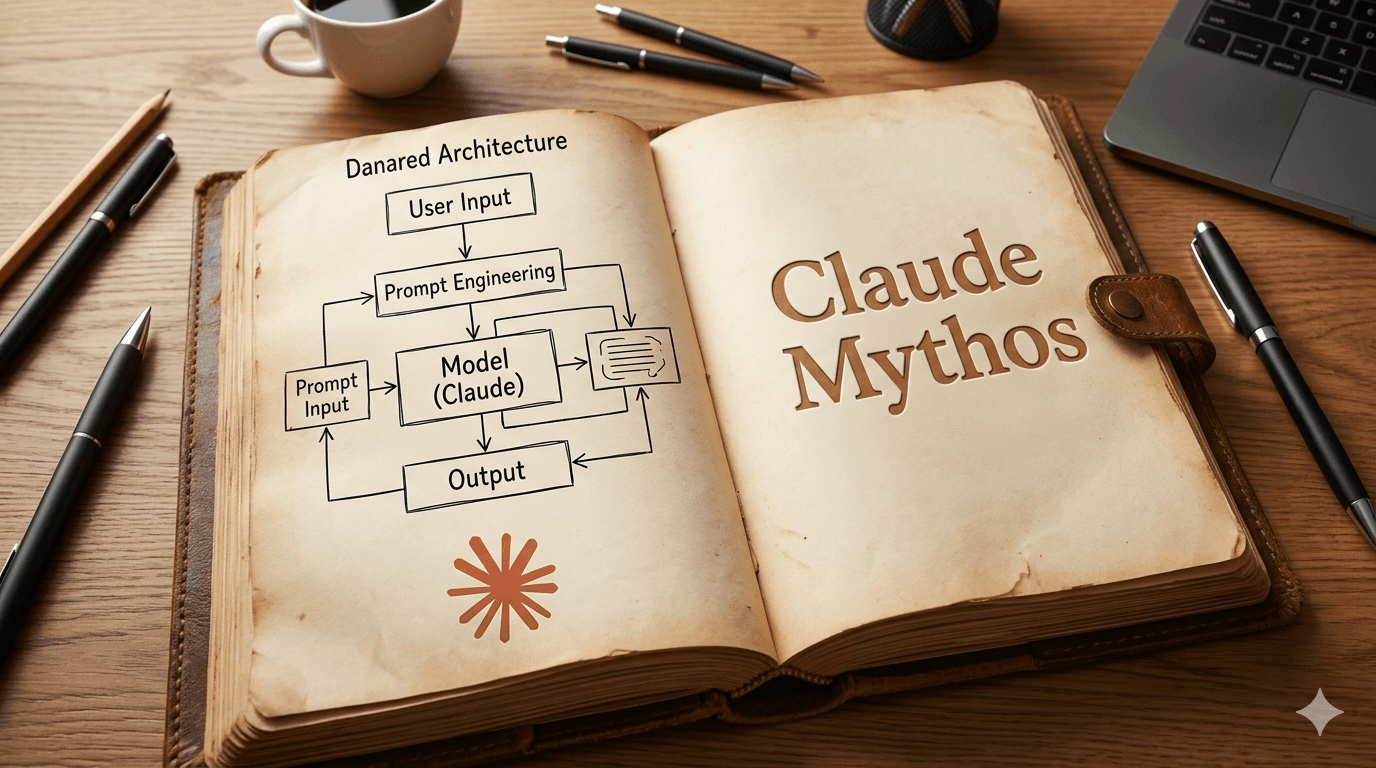
An Anthropic engineer with no formal security training asked Claude Mythos Preview to find a remote code execution vulnerability. Set it running, went home. Woke up the next morning to a complete, working exploit.
The security industry fixated on what the model found. That's the wrong thing to look at. The scaffold Anthropic used wasn't built for security research — it was the same agentic loop that powers Claude Code, pointed at a sufficiently capable model. No custom architecture. No specialized pipeline. The same loop that helps developers write software also produced a working exploit for a 17-year-old FreeBSD vulnerability, autonomously, overnight, for under $2,000.
If you're building production agentic AI systems, the thing worth understanding isn't the model. It's how the system around the model was designed.
What an Agentic Scaffold Is — and Why Mythos Made It Impossible to Ignore
An agentic scaffold is the surrounding system architecture — execution boundaries, task routing, tool access, memory management, and verification steps — that determines whether a capable model can actually do useful work reliably in production. The model generates the reasoning. The scaffold determines what it can touch, what it checks, and what happens when something goes wrong.
Anthropic draws a specific architectural distinction between workflows, where LLMs and tools follow predefined code paths, and agents, where the model dynamically directs its own process and tool usage. The Mythos scaffold falls squarely in the second category. Claude decided what to read, which hypotheses to test, which tools to invoke, and when it was done.
The performance evidence for well-designed scaffolds has moved well past theoretical. Anthropic's engineering team measured a multi-agent system using Claude Opus 4 as the lead agent with Claude Sonnet 4 subagents against a single-agent Claude Opus 4 on the same task. The multi-agent system outperformed by 90.2% on their internal research benchmark. Same model family. Different architecture. That gap is the scaffold.
For anyone already thinking through agentic AI deployment for enterprise workflows, Mythos is the clearest public case study we've had that architecture is the primary variable — not which API key you're using.
Most Teams Are Debugging the Wrong Thing
When an agentic system underperforms, the first instinct is to blame the model. Upgrade to the next tier, try a different provider, start a fine-tuning experiment. We've seen this pattern repeatedly, and it's almost always the wrong call.
Anthropic didn't change the scaffold for Mythos. They used the same agentic loop already built into Claude Code. The model improved dramatically; the architecture didn't need to. That's the uncomfortable implication: if your agentic system isn't performing reliably in production, the scaffold is the more likely culprit than the model.
Right now, teams are spending weeks running evals across GPT-5.2, Claude Opus 4.6, and Gemini 3.1 Pro, then deploying the winner into scaffolds with no execution isolation, no input prioritization, and no verification layer. The benchmark score becomes irrelevant because the system around the model isn't designed to translate capability into consistent results. You end up with a very capable model doing unreliable work, and the conclusion is "we need a better model" instead of "we need a better scaffold."
The more useful question to be asking before any model selection conversation: which scaffold decisions do we need to get right before this model's capability can actually show up in production?
Four Decisions Anthropic Made That Most Enterprise Builders Skip
Anthropic's Mythos red team report describes the architecture plainly. Four of those design decisions transfer directly to enterprise agentic systems, and none of them are exotic.
Isolate what each agent can touch. Every Mythos run launched inside a container cut off from the internet and every other running system. The obvious read is that this is a safety measure. The more useful read is that it's what made running thousands of parallel scaffold runs operationally sane — one agent's failure had zero blast radius on anything else, and results from different runs were clean and comparable.
For enterprise systems touching live CRM records, billing APIs, or patient data, the principle is the same: define what each agent can access before you define what it should do. Blast radius is an architectural decision. If you can't describe each agent's execution boundary in one sentence, you don't have a scaffold — you have an agent loose in your production systems with optimistic logging.
Decompose the problem space, not just the workload. Anthropic ran many Claude instances simultaneously, each focused on a different file in the target codebase. The point wasn't speed through parallelization — it was coverage through independent exploration. Each agent had its own context window, its own path through the problem, its own conclusions. The performance difference this produces is also mechanical: parallel subagents enable breadth-first search across a problem space without the path dependency that accumulates in a long single-agent context. The longer a single agent works, the more its earlier conclusions constrain its later ones. Multiple agents don't share that constraint.
In LangGraph-based systems this looks like a fan-out node distributing a decomposed task across specialized workers. In practice it's one of the highest-leverage structural decisions you can make, and most teams building agentic systems still default to sequential single-agent pipelines because it's simpler to reason about initially.
Add a triage step before the expensive work. Before assigning agents to files, Anthropic asked Claude to rank each file by vulnerability likelihood — a simple 1-to-5 score. Files rated 1 had nothing interesting; files rated 5 handled raw external input or user authentication. Agents started at the top and worked down.
This is a priority queue built into the scaffold. The model's attention is treated as a finite resource to be allocated deliberately, not something you burn uniformly across all inputs. A lightweight classification call before the main execution path — one that routes, scores, or filters inputs — consistently reduces token costs and improves completion rates on the tasks that actually matter. Teams that skip this step are essentially running their most expensive agents against their least interesting inputs with equal frequency.
Put a separate agent at the end whose only job is to check the work. After bug reports came in, Anthropic invoked a final Claude instance with a single prompt: is this bug real and worth acting on? Discard what isn't. The agent that did the work didn't evaluate the work. Those were structurally separate responsibilities.
This pattern — what Anthropic's own "Building Effective Agents" guidance describes as a core principle of multi-step agentic design — is the most frequently skipped and the most consequential. The model that executed a task is also the model most likely to be confidently wrong about whether the task was executed correctly. A verifier agent catches that before it becomes a production action. We'll come back to what skipping this looks like in practice, because it has a specific and recognizable failure signature.
What Skipping the Verifier Looks Like at Scale
There's a failure pattern in enterprise agentic deployments that doesn't announce itself. It accumulates quietly.
An agent has access to a CRM, an email API, and a billing system. No execution boundary defines which systems it touches in which sequence. No triage step determines whether an incoming task is worth processing at all. No verifier gate checks the output before triggering an action. The system works fine in testing. The demo goes well. The pilot looks promising.
Then it hits production data. A retrieval step pulls a stale record. The agent acts on it. The action — an email sent to the wrong contact, a field overwritten, a charge initiated against the wrong account — completes before anyone reviews the output. And the failure isn't dramatic. It's plausible. The model did something a human might have done with the same information. That's actually what makes it hard to catch: it doesn't look like a system error, it looks like a process error, and by the time someone connects the dots the issue has recurred a dozen times.
The math here is not forgiving. At a 5% per-step failure rate — well within normal range for LLM-based systems on real-world tasks — an agent taking 20 sequential actions completes a fully correct end-to-end workflow less than 36% of the time. That's a compound probability problem, not a model quality problem, and no amount of prompt tuning on the primary agent fixes it. Understanding when a multi-agent system is actually warranted matters here too — adding more agents without adding verification surfaces makes this failure mode worse, not better.
A verifier agent that runs after every consequential output is the specific structural fix. Not a guardrails library. Not a system prompt with "double-check your work." A separate agent with a separate context, a narrow job description, and the authority to reject outputs before they reach production systems.
How This Translates When the Stakes Are Real
The Mythos scaffold was built for security research, which has unusually clear ground truth — either the exploit works or it doesn't. But the four decisions generalize to regulated-industry production deployments without requiring any modification to the underlying logic.
In our Medical Claims AI work, the verifier agent concept isn't optional architecture — it's the mechanism that makes autonomous processing auditable and defensible. Before any proposed action touches a live claim record, a separate review step confirms the action is consistent with policy. Not because the primary agent is incompetent, but because the separation of execution and verification is what allows the system to be explained to a regulator. The agent that processes the claim and the agent that confirms the action are structurally different, operating on different prompts, with different objectives. That's the same thing Anthropic built, applied to healthcare claims instead of OpenBSD.
Containerized execution maps to data boundary enforcement: the agent working a specific claim accesses only the records relevant to that claim. Subproblem decomposition maps to parallel document analysis, where different sections of a complex claim are reviewed concurrently rather than sequentially. Priority triage maps to a pre-routing step that distinguishes straightforward claims from contested ones before any expensive LLM processing runs.
None of this required a frontier model to work. It required the scaffold discipline to work correctly and the architecture to be auditable when something went wrong.
Where to Actually Start
Most teams building agentic systems right now should do four things before touching model selection or prompt optimization.
Map each agent's execution boundary and write it down as a one-sentence constraint. If you can't write it, you haven't defined it. "This agent can read from the claims database and write to the staging queue; it cannot write to live records or initiate external API calls" is a scaffold boundary. "This agent processes claims" is not.
Add a triage step before your main execution path. In LangGraph this is a classification node — a fast, cheap model call that scores or routes the input before the expensive agent work begins. The goal is to ensure your most capable agents are spending their context on inputs that actually warrant them. Even a simple binary router — "is this input within the expected task scope, yes or no?" — catches a category of failure that no amount of main-agent prompt engineering will address.
Build the verifier agent before you scale the primary one. Not in version two. Not after the pilot shows results. The verifier's prompt is simple: given this input and this output, is the output correct and safe to act on? If not, what specifically is wrong? Add it before any agentic output touches a real system. Every engagement where we've retrofitted this after deployment has been harder and more expensive than building it first.
Instrument from day one. LangSmith for LangGraph-based systems, native tracing for Claude-based pipelines. Agentic failures appear in unexpected places — usually not where you added the most error handling — and without traces you're debugging by intuition. If you want to understand how to structure this architecture for a specific domain or compliance environment, Artinoid's AI Engineering team works directly on these problems.
The Part Everyone Is Missing
Here's what the Mythos story is actually about for builders: frontier models are going to keep getting better, and they're going to become more accessible to more teams. Logan Graham, Head of Frontier Red Team at Anthropic, told WIRED that comparable capabilities to Mythos are probably six to eighteen months away from other labs. The model capability question will continue to resolve itself.
The scaffold problem won't resolve itself. It requires deliberate engineering decisions — execution boundaries, decomposed subproblems, input triage, verification gates — that don't come from upgrading your API tier or switching providers. Anthropic didn't win the Mythos result because they had an unusual architecture. They won because they applied disciplined scaffold engineering to a capable model and let the model do what it was capable of.
Most production agentic systems fail not because the model can't do the task, but because the system around the model wasn't designed to let it. Get the scaffold right and the model improvements compound. Skip it, and you'll still be running pilots in a year.